In honor of Earth Day - April 22nd - I’d like to tell you a bit about my master’s thesis. Might want to grab some tissues. You’ve been warned.
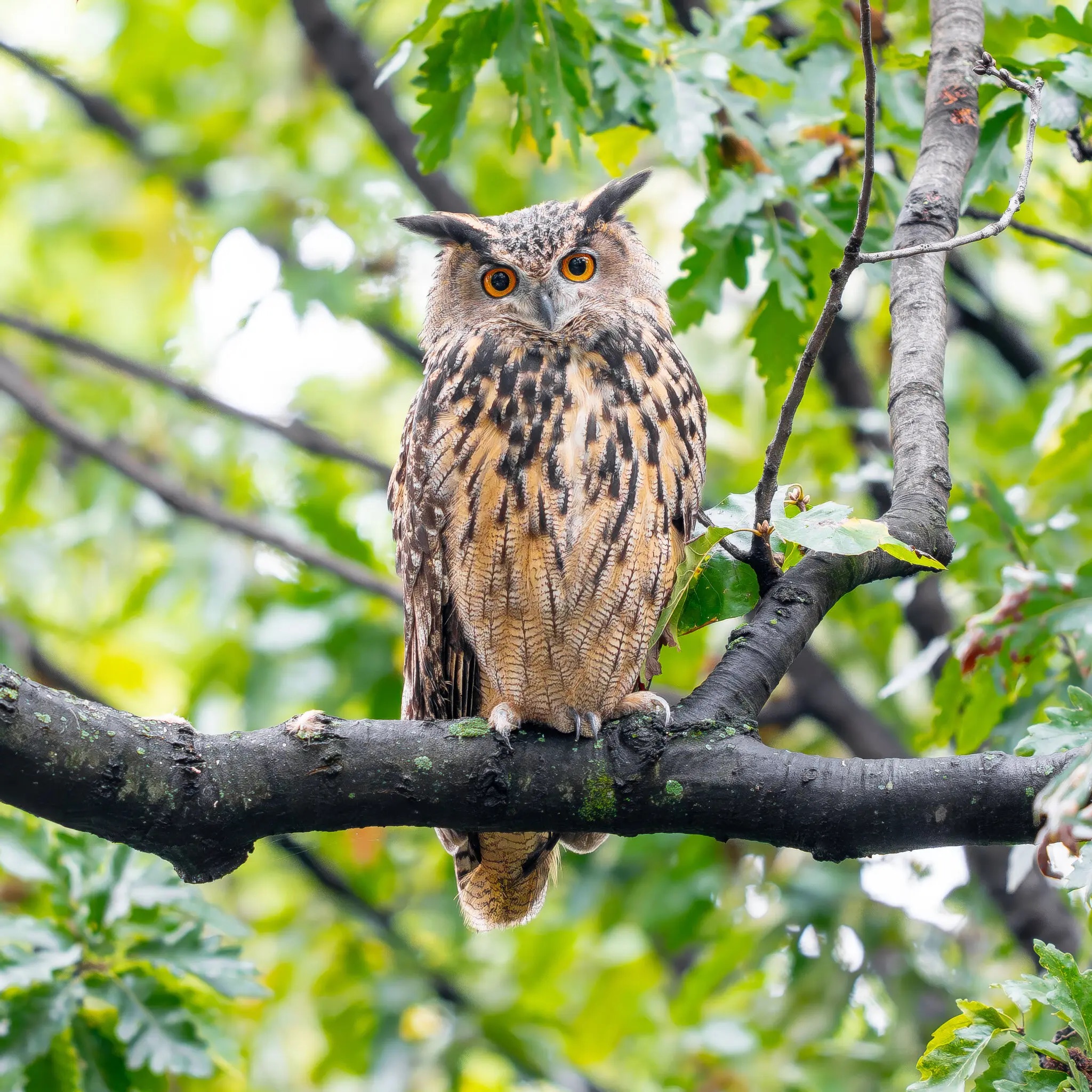
Flaco, Manhattan’s Beloved Celebrity Owl, Gets His Close-Up | New York Times
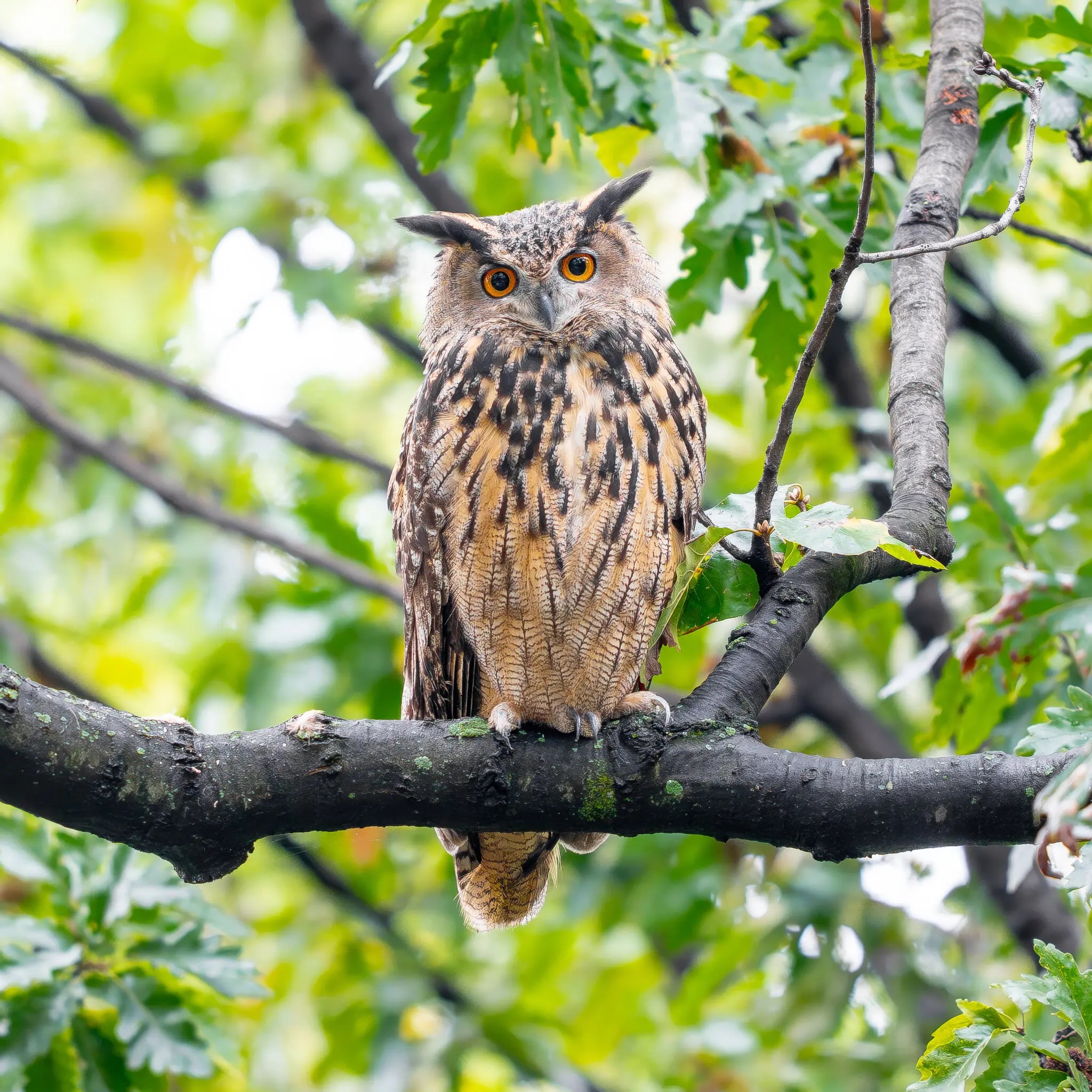
This is Flaco. Adorable, right? Flaco was an Eurasian Eagle Owl in the Central Park Zoo. In 2023, his enclosure was vandalized and he escaped. After numerous failed attempts to catch him, he was left to become an avian Manhattanite. He soon became a national sensation. People flocked from all over to see him. Maps were created to show his favorite haunts. He even had his own Instagram account.
But sadly, just a year after his escape, he was found dead at the bottom of a building. The initial autopsy found substantial hemorrhaging, consistent with acute traumatic injury. A month later, another autopsy found two underlying conditions: he was infected with pigeon herpesvirus from eating feral pigeons, and he had rodenticide in his system. He had collided with a Manhattan building after being poisoned with pesticides.
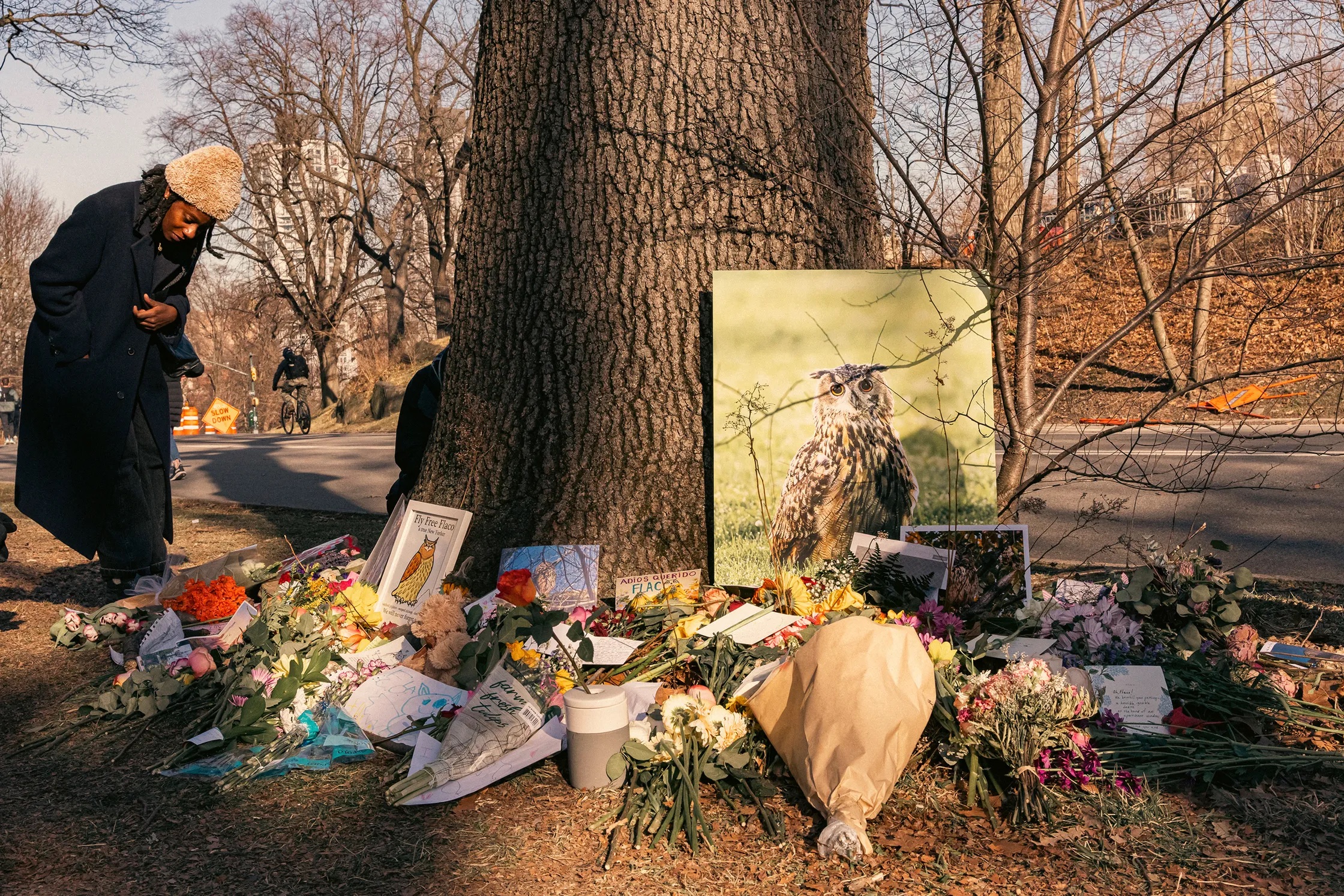
Mourning Flaco, the Owl Who Escaped | The New Yorker
Flaco’s story highlights the challenges that birds can face in an urban environment. Loss et al. 2015 conducted a literature review in North America and found that predation by cats is the largest source of direct anthropogenic bird mortality - responsible for killing 2.4 billion birds per year in the United States. Other sources include collisions with automobiles, collisions and electrocution at power lines, collisions with communication towers, poisoning from pesticides - like in the case of Flaco - and collisions with wind turbines. In the U.S. 599 million birds die annually by colliding with buildings. This is second only to predation by cats.
Typically, victims of bird-window collisions die due to intracranial hemorrhaging, internal bleeding, and fractured bones. Injured survivors can be prone to predation. Klem 1990 describes an account of an Evening Grosbeak that became paralyzed over the course of three weeks. When it was sacrificed, a massive blood clot was found in its brain.
How do we study bird-window collisions? There are experimental studies, and observational studies. In experimental studies, scientists use a set-up known as a flight tunnel. A bird is released at one end, and it must make a choice: to fly towards the glass with a deterrent, or to fly towards open space. There is a net for the bird’s safety. If the bird sees the glass as a barrier, it flies towards the “open space” into the net. Studies like these help to create effective solutions for what Klem calls “solid air.” Other studies - like mine - try to find environmental factors that contribute to bird-window collisions.
My research aim: to assess the effect of multiple architectural and landscape features on the frequency of bird-window collisions, in the city of České Budějovice.
The study took place over 13 months and consisted of monthly surveys at 36 buildings, spanning the Jihočeská Univerzita campus, and administrative buildings in town. During each building survey, I walked around the perimeter of the building twice, once looking at the ground to scan for carcasses and feather piles, and once looking at the windows to scan for imprints and feathers stuck to the glass. [Side note: I was always aware of how strange this must have looked. I would love to watch the security footage of me walking the perimeter of any of the administrative buildings. Even better, I would love to watch the security footage, of the security guards watching the security footage, of me walking the perimeter of any of the administrative buildings.]
In total, I saw evidence of 246 bird-window collisions at the 36 buildings. I found 30 carcasses and 13 predated feather piles. From the carcasses, I could identify eight species: four Eurasian Blackbirds, two Common Wood Pigeons, two Black Redstarts, one Rook, one Great Tit, one Common Chiffchaff, one Goldfinch, and one Song Thrush. The four worst buildings made up almost 50% of the collisions. The worst building - the library on our campus - is where I write my thesis, and is where I am writing these words.
So, what can you do?
First, I encourage you to keep your eyes open; separate from the buildings I have studied, I have found evidence of 41 other collisions, incidentally, just going about my day. You’d be surprised at the scale of the problem.
Second, I encourage you to get educated. FLAP Canada is a volunteer organization dedicated to documenting the problem of bird-window collisions. Since 2001, FLAP has held the Annual Bird Layout, an “emotive and provocative display” of the thousands of dead birds that volunteers have collected in the previous year. Since its establishment in 1993, FLAP has documented over 99,000 victims of BWCs from 178 species. You can find a video of their 2021 Bird Layout here. Here, you can find a link to Solid Air written by Daniel Klem Jr., one of the foremost experts on bird-window collisions. If you speak Czech - or appreciate chances to practice, like me - you can find an informative video by the Česká Společnost Ornitologická here.
Finally, if a window in your home is problematic (i.e large area of glass near trees), I encourage you to apply stickers on the outside of the window, 5 - 10cm apart. Some people think these stickers are not aesthetically pleasing. But I ask - if these aren’t, are they…. ?
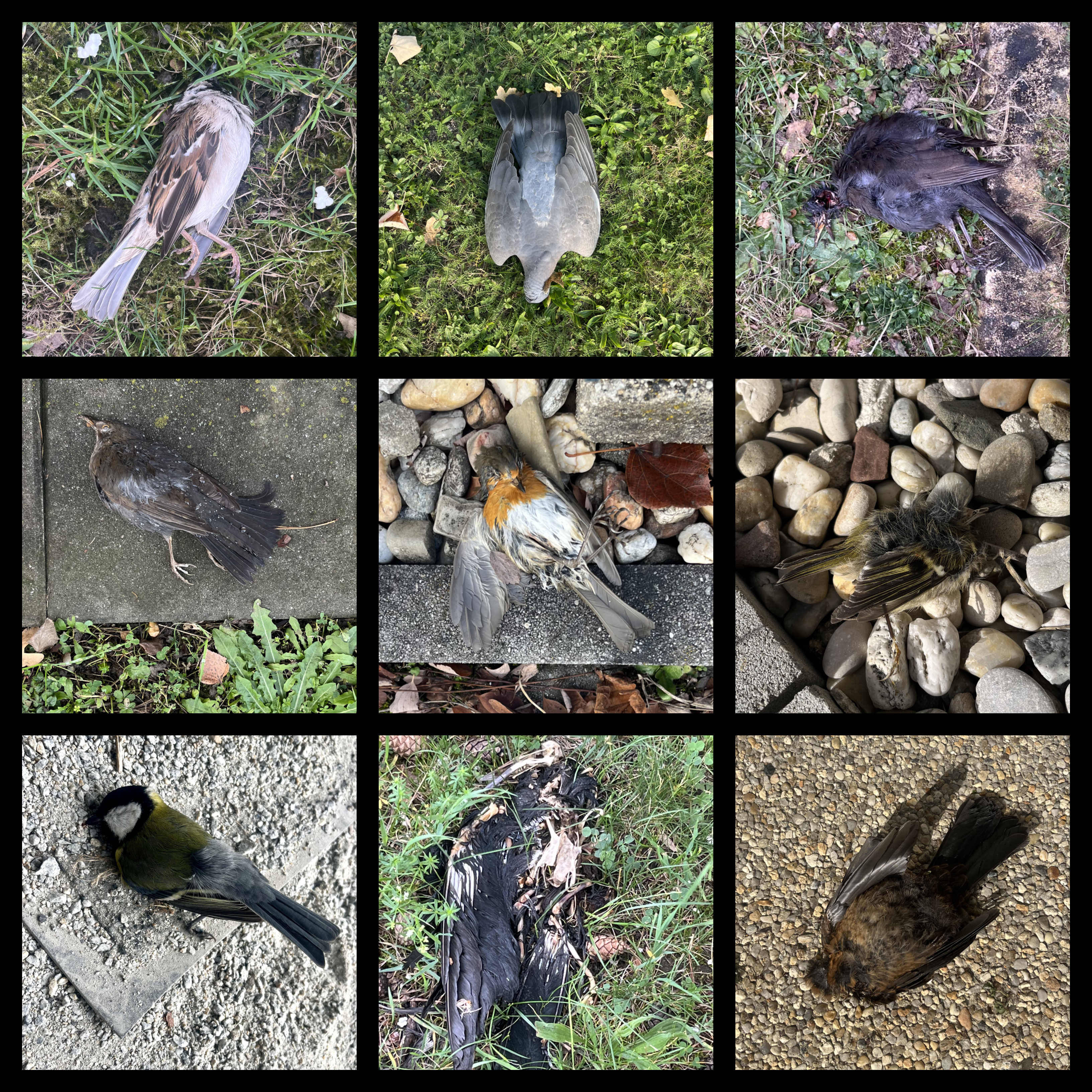
Photo credit: Stephanie Parascandolo
 CS
CS