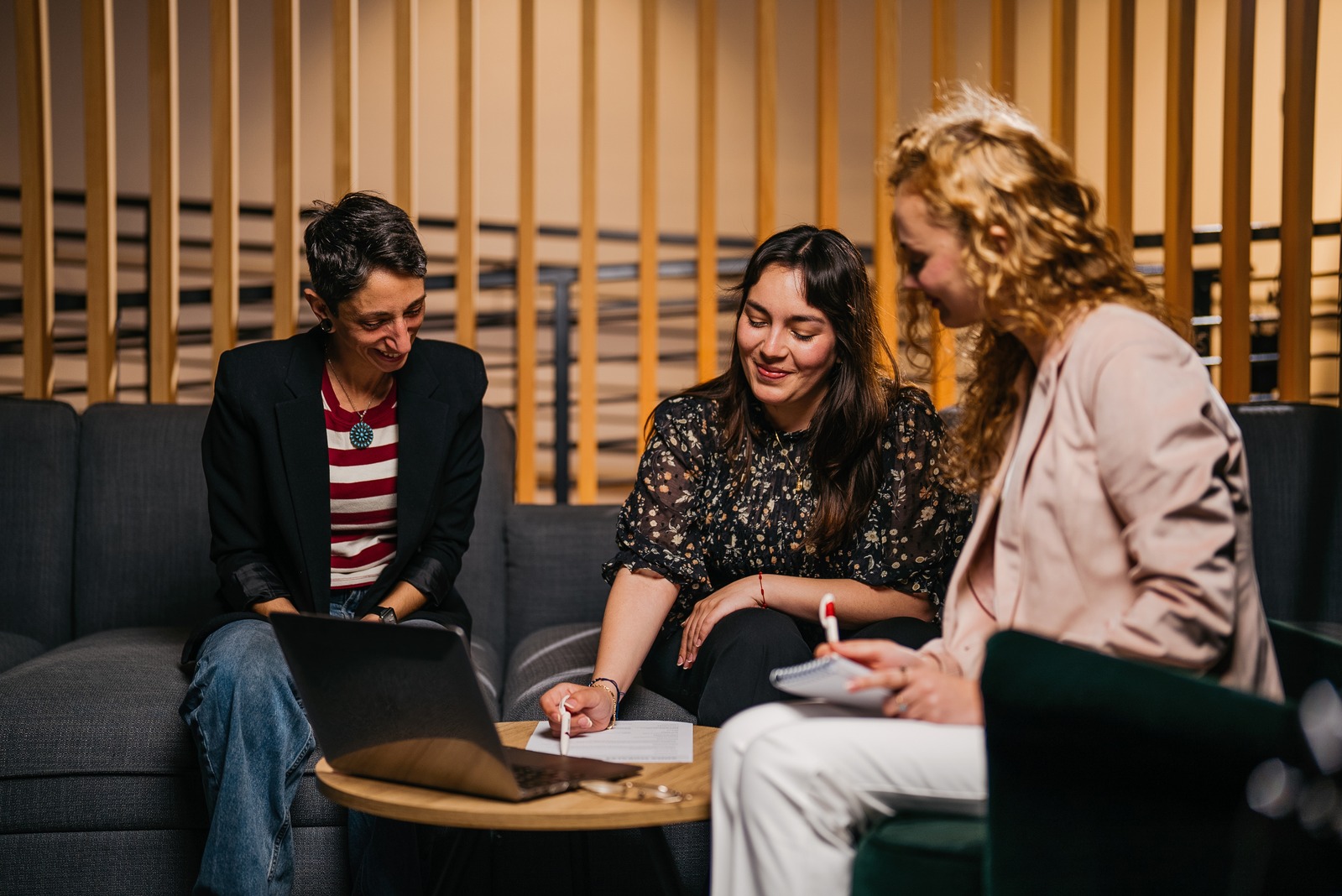
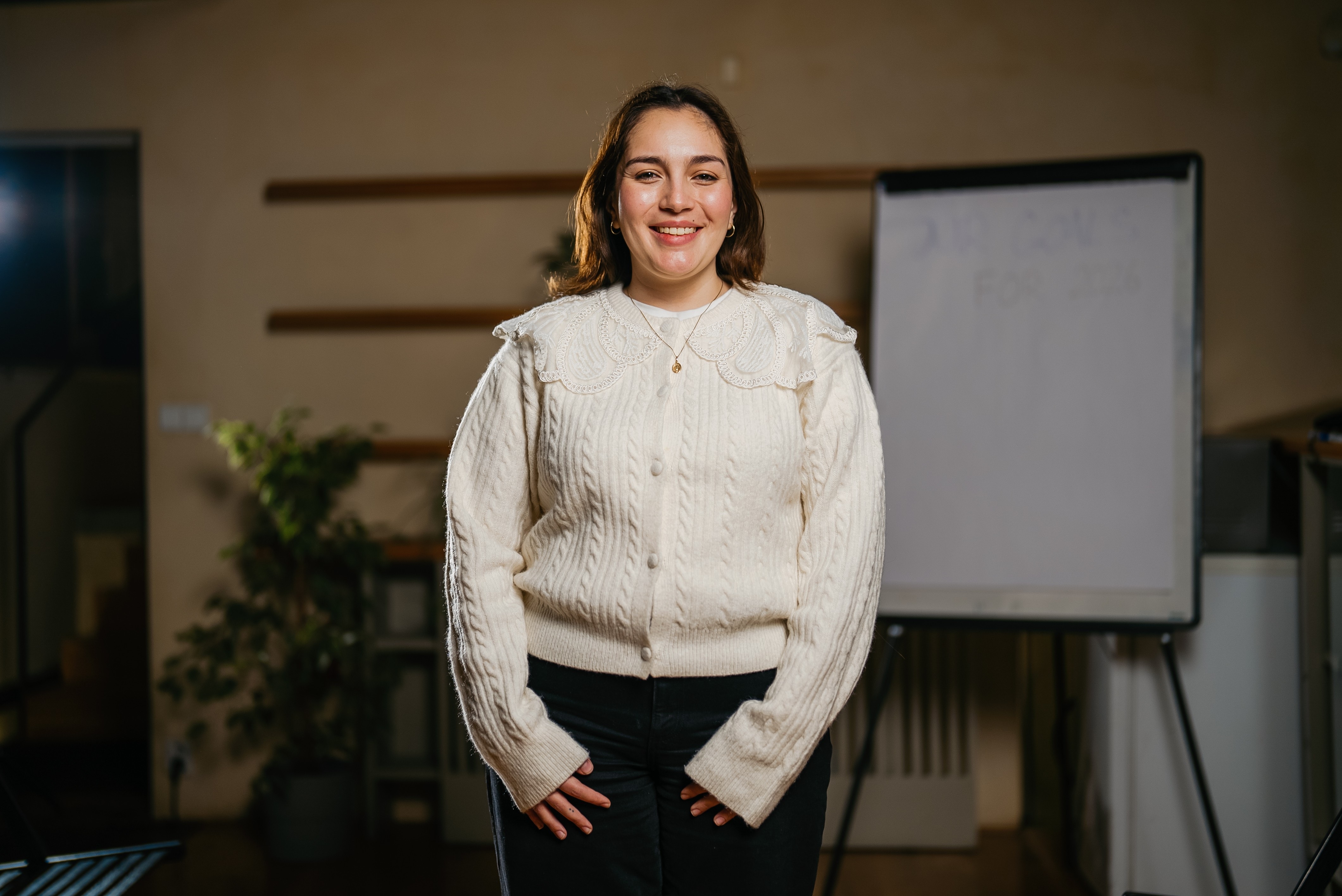
When I first joined Mrs. Mazurova’s class at the University of Pardubice, I quickly realized she was the kind of teacher who makes you participate in ways that actually prepare you for real life. You do not just sit there and absorb information. You speak, practice, present, and learn to communicate confidently.
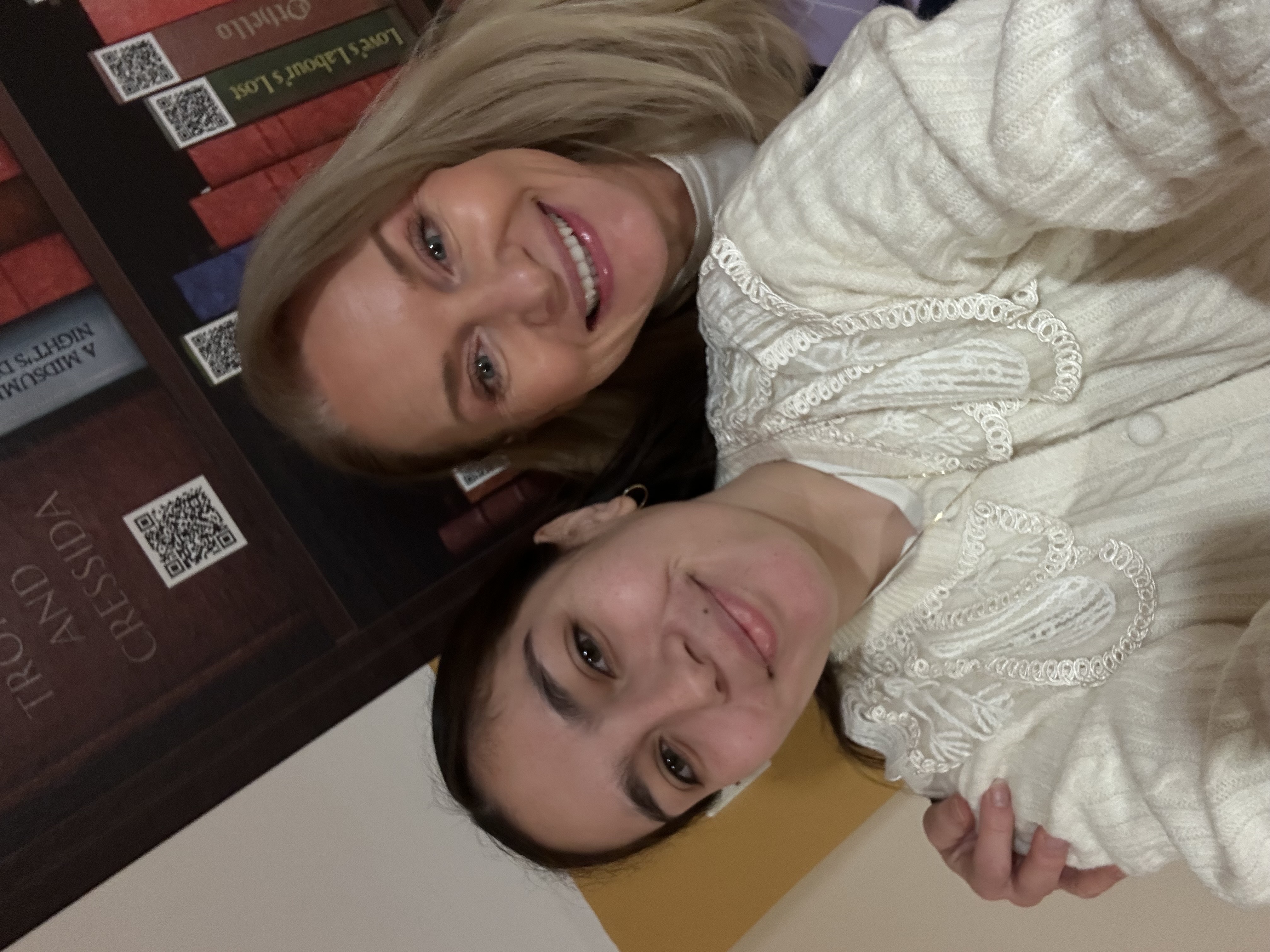
Now, as a student ambassador for Study in Czechia, I wanted to introduce someone who truly shapes the student experience here, not just through what she teaches, but through how she thinks about education, the future of work, and international students. So I sat down with Mrs. Mazurova, my teacher at the Department of English and American Studies, to share her story with you.
Mrs. Mazurova has been teaching at the university for almost four years. She works as a lecturer, teaching General English and English for Specific Purposes, and she focuses heavily on skills. In our interview, she highlighted presentation skills and employability training as key parts of her work, and it makes sense. In her view, a university should not only give you knowledge. It should help you build the abilities you will need outside the classroom.
What many people might not realize is that her role goes beyond teaching. Mrs. Mazurova is also deeply involved in internationalization. She described herself as the head of internationalization for the Faculty of Arts and Philosophy and as supporting internationalization at the department level. Listening to her, it became clear that this work is not just administrative. It is connected to building a university environment where international students feel welcome, supported, and part of a real community.
Another side of her work feels especially relevant right now. Mrs. Mazurova described herself as an “AI-curious” person, and she is part of a group of academics and lecturers who give lectures on artificial intelligence during the winter semester. She is passionate about the intersection of language, communication, and technology, and her interest in AI is not theoretical or distant. It is practical. She believes technology is one of the fastest ways to discover new methods, new possibilities, and better ways of working, and she has always tried to be an early adopter.
That attitude comes from her professional background. Before academia, Mrs. Mazurova spent more than fifteen years working in international business and diplomacy. She described her professional journey in a simple phrase that stuck with me: from theory to practice and back to theory. After graduating, she moved into the business world. She later worked at the Australian Consulate in Prague as a business development manager for the Australian Trade Commission, which supports international trade as part of Australia’s diplomatic work. She also briefly worked in a financial institution. Eventually, she transitioned into university teaching. The reason was not that she wanted to leave her previous career behind, but that she wanted a different challenge and a different pace. International business involved a lot of travel, often for long periods, and she reached a point where she wanted a more stable environment where she could focus on new priorities.
As her student, I was especially curious about what she enjoys most about working with students, because people often have strong opinions about younger generations. Mrs. Mazurova had a refreshing answer. She said she loves students’ energy and does not share the negative views some people have about today’s young people. She sees students as innovative and passionate about their interests. What made this even more meaningful is that she does not talk about learning as something students do and teachers supervise. She said she has never stopped being a learner herself and genuinely learns from her students, too. That mindset is something you can feel in the classroom.
When it comes to teaching, she mentioned one area she especially loves, her course “Employability Training”. This is where her work experience becomes a huge advantage for students, because she can bring in real examples from professional life and show how skills work in practice. She believes the best way to transfer knowledge is through experience, not just theory. When I asked which skills from her previous career help her most now, she answered immediately: communication. She also emphasized flexibility and the ability to adapt quickly, including adopting new technologies and implementing them in everyday work.
That is precisely why she encourages students to actively use AI. She believes it will reshape the world of work, and she wants students to be ready for that reality. At the same time, she shared something honest and essential. She is not always sure students use AI as effectively as they could. Knowing that tools exist is not the same as learning how to use them strategically. In her view, AI can reduce repetitive tasks and make work smoother, but it cannot replace initiative. No one will tell you exactly what to do or how to use it best. Students need creativity and responsibility to make it truly helpful.
I also asked her what a typical day at the university looks like. She teaches every day and balances that with responsibilities connected to internationalization. But she tries not to get lost in administration. Instead, she prioritizes staying in touch with students, talking to them, and discussing issues that are not always strictly tied to a single subject. She also makes room in her day for physical activity, which she considers essential. She is a passionate runner and also enjoys the gym, cycling, and hiking during spring and summer. It was a small detail, but it showed something important about her approach. Productivity is not everything. Balance matters.
Because this interview was for Study in Czechia, I asked her what she sees as the main advantages of studying here. Mrs. Mazurova described Czech society as generally open-minded and liberal, and she believes the country offers a welcoming atmosphere for people from different cultures. She also highlighted something international students often appreciate once they arrive. Czechia is not only about big capital cities and huge institutions. Many universities here have a more personal scale, which creates space for academic growth, creativity, and individual attention.
When we focused specifically on Pardubice, she explained why she thinks it is an excellent city for students. The campus is a perfect size and easy to navigate, and you can walk almost everywhere. She mentioned that the university offers a wide variety of study programs considering its size. She also emphasized affordability compared to larger cities and that Pardubice is peaceful while still offering events and activities students can join. One more practical advantage she highlighted is its location. Pardubice is a transport hub, which makes it easy to travel around Czechia and beyond by train, bus, or car.
I asked her how she would describe the atmosphere of the Faculty of Arts and Philosophy to someone abroad considering studying here. She described it as familiar and community-like, where people often know each other by name. She also spoke positively about teachers' attitude, saying they are approachable and encouraging because they do what they genuinely enjoy. In her view, teachers spend time with students, talk to them, motivate them, and intellectually stimulate them. As a student, this supportive atmosphere is one of the reasons why studying in Pardubice feels so personal.
We also discussed the language question that many international students face: Should you learn Czech before you arrive? Mrs. Mazurova said that learning a few basic phrases is always a big plus because people appreciate the effort, but no one expects international students to speak Czech fluently. Czech is difficult, and she acknowledged that honestly, so her advice felt realistic. A few phrases can help you connect, and that is already a strong start.
Before we finished, she shared one more thought she wanted included. She believes universities should focus far more on soft skills, even within subjects that are usually considered more technical or academic. Communication, listening, leadership, and adaptability, in her view, are the skills students will need to thrive in the near future, because knowing only what you study will not be enough. She tries to develop these abilities through practical communication activities, presentations, short speeches, and “thinking on your feet” moments where students cannot rely on scripts. She also connects this to technology and AI, explaining that these tools can help reduce repetitive work, but students still need creativity and self-direction to use them well.
At the end of our interview, I asked how she imagines the university in five years. She hopes for a stronger international environment in both directions, with more international students coming to Pardubice and more Czech students going abroad through different programs, not only Erasmus. She also hopes universities in Czechia continue modernizing, because education cannot rely on the same methods from fifteen years ago in a world that has changed so dramatically.

For me, this interview was a reminder that studying abroad is not only about a country or a campus. It is also about the people who guide you through the experience. Mrs. Mazurova’s message to international students was warm and direct. Come with curiosity, and we will give you more than you expect. As her student and as a Study in Czechia ambassador, I can honestly say that is the spirit I want to share with the world.
 CS
CS