CS
CS

Step 1 – Learn Czech
Take a Czech language course or join a foundation programme.

Learning Czech takes time, but it can make your studies more affordable, open a wider choice of programmes and help you settle into everyday life in Czechia.
Take a Czech language course or join a foundation programme.

Many Czech-taught degree programmes require at least B2 level Czech.

When you apply, the university will check whether your Czech is good enough for study.

If you are admitted to a Czech-taught programme at a public university, you do not pay tuition fees.
Learning Czech can make your studies more affordable and opens more opportunities during and after your studies.
Public and state higher education institutions in Czechia offer tuition-free degree programmes taught in Czech, regardless of nationality.
The number of English-taught programmes is growing, but studying in Czech gives you access to a much wider range of degrees and specialisations.
Czech can help you in everyday situations, from housing and public offices to part-time jobs, internships and student life.
If you want to stay in Czechia after graduation, Czech language skills can make it easier to find work and communicate in professional settings.
Learning Czech can make your studies more affordable and opens more opportunities during and after your studies.
Public and state higher education institutions in Czechia offer tuition-free degree programmes taught in Czech, regardless of nationality.
The number of English-taught programmes is growing, but studying in Czech gives you access to a much wider range of degrees and specialisations.
Czech can help you in everyday situations, from housing and public offices to part-time jobs, internships and student life.
If you want to stay in Czechia after graduation, Czech language skills can make it easier to find work and communicate in professional settings.
There is no single path for everyone. You can choose a university course, a foundation programme, a summer school or another Czech language course depending on your level and goals.
Many universities offer Czech courses for international students. These courses vary in length, intensity and focus. You can find semester courses, year-long courses and evening classes, both in person and online. You can find the courses directly on the universities' websites:
You can learn Czech at 21 Czech Centres abroad, each centre has its own specific offer of full-time and online courses. Czech language courses are also organised by the Centres for Support of Integration of Foreigners.
Foundation programmes are designed for students who want to prepare for degree study in Czech within about one year. They combine language learning with academic preparation. They usually include:
You can check the university websites directly:
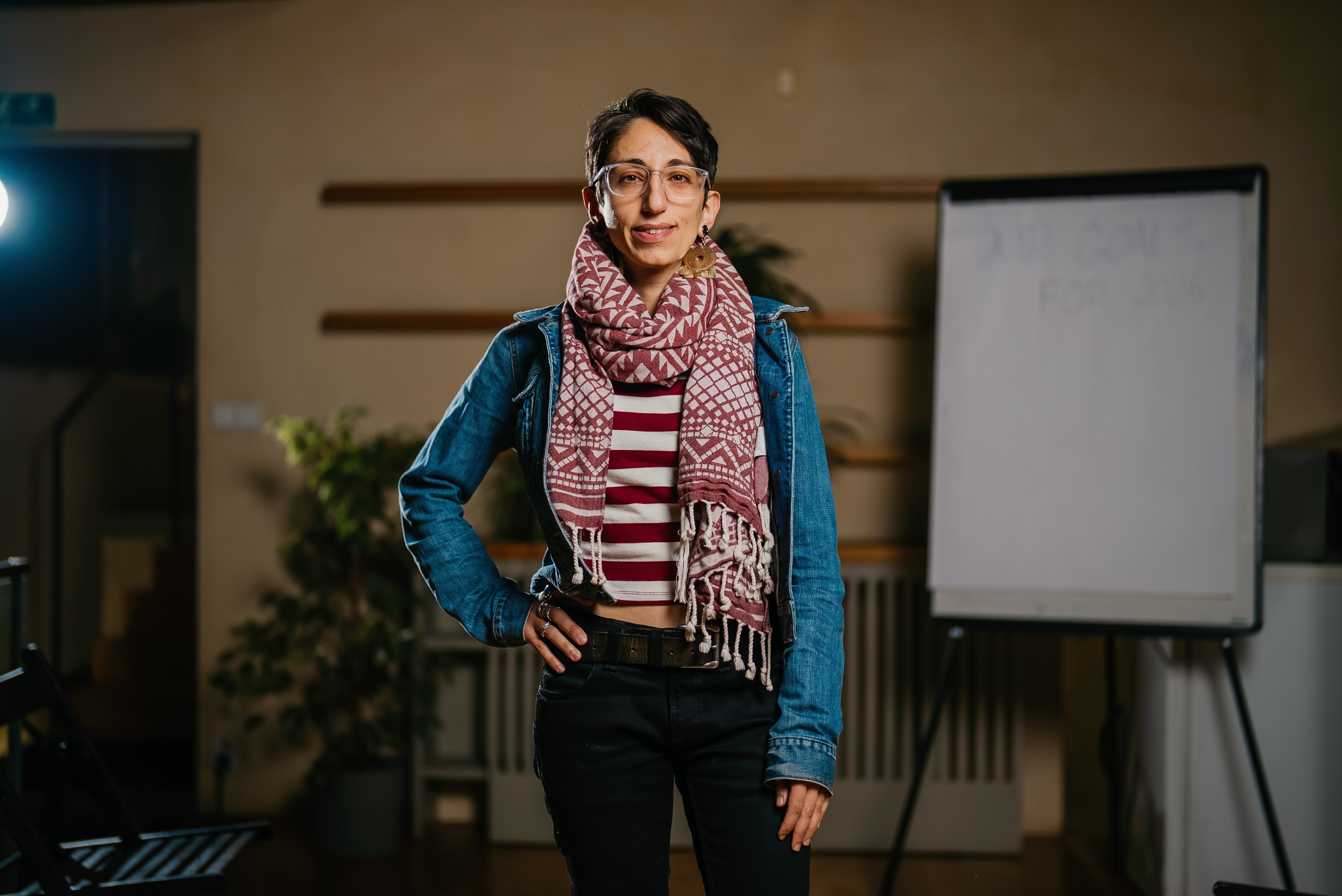
Stephanie
University of South Bohemia in České Budějovice
I’ve taken a variety of Czech courses – traditional evening classes at university, one-on-one conversational lessons online, women-only group lessons... My biggest piece of advice is to find a method that works for you, and to remind yourself that Rome Prague wasn’t built in a day. I’ve gone from practicing “the kráva eats the tráva” (the cow eats the grass) to preparing for the Czech citizenship exam, and you can too!
Many universities organise summer schools during the summer holidays. These short programmes combine study with cultural activities and bring together students from around the world. Some focus especially on Czech language and culture, such as the Summer Schools of Slavonic Studies. These programmes usually last 3 to 4 weeks and include:
Each year the Ministry of Education, Youth and Sports offers scholarships for selected applicants.
For Czech compatriots living abroad, the Ministry of Education, Youth and Sports offers scholarships to attend a 4-week Czech language course as part of the Programme for the Support of Czech Cultural Heritage Abroad. Thanks to this programme, compatriots who have a good command of Czech have the opportunity to participate in a study stay at a Czech university. This is a one- or two-semester course of study in Czech, usually at a faculty of arts of a Czech university.

Not necessarily. Many international students arrive in Czechia with little to no Czech. In bigger cities and at universities, English is often widely spoken, especially among students and younger people. Still, even basic Czech can make everyday situations easier.
That depends on your previous language experience and how intensively you study. Many international students reach B2 level within one year through an intensive preparatory programme. Shorter courses and summer schools can help you get started or improve your Czech before you apply.
Most programmes taught in Czech require B2 level Czech. Universities may check your language skills through a certificate, an entrance exam in Czech, a foundation programme certificate, an interview or a written test. The exact requirements depend on the university and the programme.
Yes. Degree programmes taught in Czech at public universities in Czechia are free of charge, regardless of your nationality. You still need to cover other costs, such as application fees, living expenses or the cost of a preparatory Czech course.